

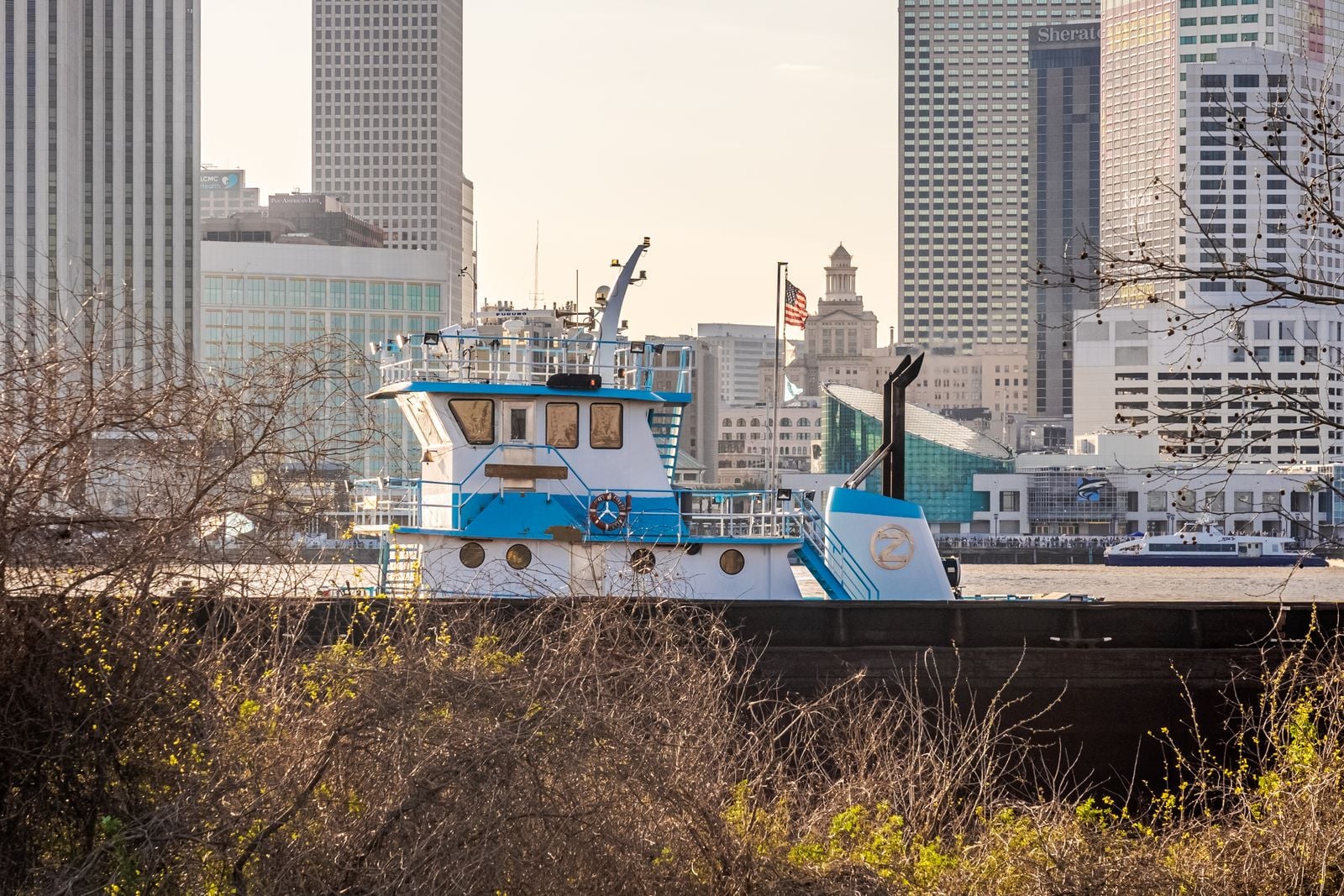
If you’re relocating to New Orleans or the Mississippi Gulf Coast for a new job, you’re arriving at an exciting moment. Billions of dollars in port, energy, steel and shipbuilding projects are reshaping the region, and with them comes a wave of engineers, executives, project managers and skilled professionals who need to find a home, often on a tight timeline.
I help relocating buyers every year, and the questions are always the same: Where should I live relative to the job site? How do flood zones and insurance work here? What does my money buy on the Northshore versus Uptown versus the Coast? This guide answers those questions, area by area.
The projects bringing new jobs to the region
Here are some of the major projects driving relocation to Southeast Louisiana and the Mississippi Gulf Coast right now.
Louisiana International Terminal (St. Bernard Parish)
Port NOLA’s new deepwater container terminal near Violet received its federal permit in August 2026. The roughly $1.8 billion project is a partnership between Port NOLA, Terminal Investment Limited (the terminal arm of shipping line MSC) and Ports America, and it’s targeted to open in 2028. Supporters project it will support thousands of regional jobs over the coming decades. (WAFB)
Where people working here tend to look: St. Bernard Parish, the Lower Garden District, Uptown and the Westbank are all a reasonable drive, and many buyers also consider Metairie and the Northshore for a longer commute with more space.
Hyundai Steel (Ascension Parish)
Hyundai Steel announced a $5.8 billion steel plant in Ascension Parish, its first in North America. Louisiana Economic Development projects 1,400 direct jobs with an average salary of $95,000, plus about 4,100 indirect jobs, and construction is expected to begin in the third quarter of 2026. (KPLC)
Where people working here tend to look: Ascension Parish communities like Prairieville and Gonzales, the Baton Rouge area, and the western New Orleans suburbs for those who want metro amenities with a longer commute.
Plaquemines LNG (Plaquemines Parish)
Venture Global has announced a roughly $18 billion expansion of its Plaquemines LNG export facility south of New Orleans. The state describes hundreds of permanent jobs and thousands of construction jobs at peak. (Louisiana Economic Development)
Where people working here tend to look: Belle Chasse, the Westbank (Gretna, Algiers, Terrytown) and Uptown New Orleans.
Ingalls Shipbuilding (Pascagoula, MS)
Ingalls Shipbuilding is Mississippi’s largest manufacturing employer, with more than 11,000 employees, and it has been actively expanding its workforce to support long-term Navy contracts. (HII)
Where people working here tend to look: Ocean Springs, Gautier, Pascagoula and Biloxi.
Aerospace and defense near Stennis (Hancock County, MS)
NASA’s Stennis Space Center anchors a growing aerospace and defense cluster in Hancock County. Defense contractor Liberty Alliance, for example, announced in 2026 that it’s expanding at Stennis International Airport to support unmanned systems work. (WLOX)
Where people working here tend to look: Bay St. Louis, Diamondhead, Pass Christian, Picayune and Slidell, which also offers an easy drive into New Orleans.
What about data centers?
Louisiana is seeing major data center investment, including Meta’s Hyperion campus in Richland Parish and Amazon’s planned $12 billion campuses in Caddo and Bossier parishes, both in north Louisiana. (Axios, Commercial Search) The City of New Orleans placed a temporary pause on new large data centers in 2026 while it studies zoning rules. (Just the News) The ripple effects still reach our area through energy, construction and engineering firms that serve these projects statewide.
Where to live: a quick guide to the region’s housing options
Every area below offers something different. Here’s an overview based on housing style, setting and commute access.
| Area | Housing style | Setting | Good access to |
|---|---|---|---|
| Uptown & Garden District | Historic homes, large lots on oak-lined streets | Urban, walkable | Downtown, Port NOLA, Westbank |
| Old Metairie | Established homes, larger lots | Suburban, close-in | Airport, downtown, I-10 |
| Mandeville & Covington | Wooded lots, gated communities, lakefront properties | Suburban to semi-rural | Causeway Bridge, I-12 |
| Slidell | Waterfront and canal homes, newer subdivisions | Suburban | I-10 to New Orleans and the Coast |
| Belle Chasse & the Westbank | Newer construction, larger lots | Suburban | Plaquemines Parish, downtown |
| Prairieville & Gonzales | Newer subdivisions, larger homes | Suburban | Ascension Parish industrial corridor, Baton Rouge |
| Bay St. Louis & Pass Christian | Beach cottages, waterfront estates | Coastal small town | Stennis, I-10 |
| Ocean Springs | Historic downtown, waterfront homes | Coastal small town | Pascagoula, Biloxi |
What relocating buyers should know about buying here
Flood zones and insurance come first
In South Louisiana and on the Mississippi Coast, a home’s flood zone and elevation can affect your insurance costs as much as its price. Before you fall in love with a house, ask for the flood zone, any elevation certificate, and quotes for both flood and homeowners insurance. A good local agent will help you compare these side by side.
Property taxes work differently in Louisiana
Louisiana’s homestead exemption reduces the taxable value of your primary residence, and you apply through your parish assessor’s office after you buy. Mississippi has its own homestead exemption, with applications through the county. If you’re comparing homes on both sides of the state line, factor in the different tax rules.
Timing matters
Many relocating buyers have a start date and a short window to find a home. It helps to get pre-approved before you visit, decide on your must-haves, and set aside a focused weekend to tour. Virtual tours and video walk-throughs can narrow your list before you arrive.
Consider renting first, or not
Some relocating buyers rent for a few months to learn the area before buying. Others buy right away to lock in a home. If your employer offers relocation assistance, ask exactly what it covers, since it may affect which option makes sense.
Frequently asked questions
How long is the commute from the Northshore to New Orleans?
Most Northshore commuters use the Causeway Bridge or I-10. Drive times vary widely with traffic and your exact start and end points, so it’s worth test-driving your commute at rush hour before you buy.
Is the Mississippi Gulf Coast close to New Orleans?
Yes. Communities like Bay St. Louis and Pass Christian are roughly an hour’s drive from downtown New Orleans by I-10, depending on traffic.
Do I need flood insurance?
If your home is in a high-risk flood zone and you have a federally backed mortgage, flood insurance is generally required. Even outside those zones, many homeowners in our region choose to carry it. Get quotes early in your search.
Can I buy a home before I move?
Yes. Many relocating buyers work with an agent using video tours and electronic signing to buy remotely or with one in-person visit.
Making your move easier
Relocating for a new role is a big change, and the right home makes it easier. I help professionals moving to the New Orleans metro and the Mississippi Gulf Coast compare areas, understand flood and insurance costs, and find the right home on their timeline, including buying remotely. You can also explore my Covington, Mandeville and Kenner area pages, or read why the biggest offer isn’t always the best one.
Moving to the area for work? Let’s talk at myNOLAhome.com.
Alicia Lagarde Craig, ALC Realty
This post is general information, not legal, tax, insurance or financial advice. Project details are based on public announcements and may change.